


You moisturize. You tone. You've tried the serums everyone recommends. Something still feels off.
Your skin isn't responding the way it used to. The glow is gone. The firmness is fading.
It's not that you're doing something wrong. Most skincare was never designed to address what's happening to your skin at the biological level. Here are 7 signs that your skin's NAD+ levels are declining — and why that changes everything about your skin.

Your skin looks dull no matter what products you use
You layer on the serums and moisturizers. There's a glow for a few hours. Then it fades.
That's not a hydration problem. It's a cell energy problem.
Skin radiance comes from healthy new skin cells cycling up to the surface from the basal layer. When NAD+ levels decline, stem cells become underpowered and produce fewer and less resilient skin cells. The dullness you're seeing is the result of a lack of cellular energy.

Fine lines and wrinkles keep appearing
You've got a skincare routine and you're mindful about your health, but fine lines are persistent.
Here's what most people don't know. The structural integrity of your skin that keeps it smooth and firm depends on the energy your skin cells generate. That energy comes from NAD+. As NAD+ levels decline starting in your 20s, the integrity of your skin barrier and cellular layers becomes compromised, and that's when lines and wrinkles start to form.
Those lines aren't just a surface issue. They're a sign your skin's foundational energy supply is running low.
Your skin texture never feels smooth, no matter how much you exfoliate
Smooth skin texture depends on your skin's ability to renew itself efficiently. Every 28 days, healthy skin cycles through a complete cellular regeneration. Old cells shed, new cells rise. This process is powered by NAD+.
When NAD+ levels drop, that cycle slows down. Old cells linger. New cells are sluggish. No exfoliant can repair regeneration problems happening at the cellular level.

Your skin has lost firmness
You remember when your skin bounced back. Now it doesn't. You may even notice skin starting to sag, especially in areas like the lower face.
Firmness is structural. It's determined primarily by how well your skin cells are functioning at a deep level. Energized skin stem cells continuously produce new, healthy skin cells that maintain the epidermis's integrity.
When NAD+ levels fall, skin produces fewer new cells and skin density lessens, thinning the epidermis. Traditional topical skincare only reaches the surface layer of cells and can't rebuild what was lost at the source.

Dark spots and hyperpigmentation won't budge, no matter what you try
Vitamin C. Acids. Hydroquinone. You've spent real money trying to fade spots that never seem to lighten, even though you're using all the recommended skincare ingredients.
Persistent hyperpigmentation is often a sign of sluggish skin cell turnover. Not just sun damage. When cells aren't renewing at a healthy rate, the processes that normally fade discoloration stall out.
Your skin feels more fragile and more reactive than it used to
Things that never bothered your skin now cause redness. Breakouts that healed in three days now take two weeks. Your skin feels more prone to irritation.
A thinner, more reactive epidermis is a direct consequence of a compromised barrier. When NAD+ declines, stem cells produce fewer new skin cells. Your skin barrier weakens.
In clinical testing, Aramore's formula produced a 53% increase in skin barrier strength in 8 weeks. Not because it coats the surface, but because it restores the cellular energy that builds the barrier from within.

You've accepted these changes as part of normal aging, but still wish your skin felt healthier
Aging is, of course, natural. But the visible signs of skin aging that most of us experience aren't just inevitable biology. They're the downstream effect of a single molecule declining faster than necessary. NAD+ levels drop by around 50% by the time you're in your 50s. That decline is the root cause of most of the changes you see in the mirror.
And for the first time, there's something that addresses it. Not by masking the signs, but by restoring the cellular processes that keep skin healthy, protected, and strong.
"It's not your routine. It's not your genetics. And it's not something you can fix with traditional skincare."
— Kevin Kong, Chief Science Officer, AramoreIf you recognized even a few of those signs, here's what you need to know
Skin runs on cellular energy. That energy is generated by a molecule called NAD+. NAD+ starts to naturally decline in your 20s, and declines by up to 50% by the time you reach your 50s. When it drops, the skin's stem cells become underpowered. They produce fewer new skin cells, the renewal process becomes less efficient, and the skin barrier thins.
The signs most people have been trying to address (dullness, lines, uneven tone, lost firmness) aren't separate problems. They're the same problem, showing up in different ways.
Most skincare works on the surface. It can hydrate, smooth, and temporarily brighten. But it can't change what's happening at the cellular level.
Dr. Anna Mandinova of the Harvard Stem Cell Institute discovered how to change that.
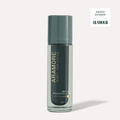
Introducing the NAD+ Cell Energizing Treatment
The first clinically-proven topical treatment to boost NAD+ in skin cells. Developed by Harvard and MIT scientists through 10 years of research.
NAD+ itself is too large to penetrate skin, so it can't be delivered directly in a topical product. Dr. Mandinova's research showed that the right combination of NMN (an NAD+ precursor), ketone bodies, and fatty acids signals NAD+ production directly inside the epidermis. This had never been done before.
The result is a treatment that doesn't sit on the surface of skin, but instead works deep beneath it.





What the clinical trial showed
An independent 8-week clinical trial with 29 women aged 44 to 61. The result: all 12 signs of visible aging addressed in a single treatment.
"I have done clinical trials for most major cosmetic companies and I have never seen results like these."


